Navigating brownfield redevelopment means tackling environmental contamination head-on. Sub-slab ventilation isn’t just a good idea; it’s a non-negotiable component for achieving and maintaining regulatory compliance on these challenging sites. By actively managing and removing hazardous soil gas, these systems ensure that new structures meet stringent environmental standards, protecting occupants and the surrounding environment from vapor intrusion risks.
The Compliance Imperative: Why Brownfields Demand Robust Mitigation
Brownfield sites, burdened by historical contamination, present unique hurdles for developers. The primary concern is often vapor intrusion—the migration of volatile organic compounds (VOCs) or other hazardous gases from contaminated soil and groundwater into overlying buildings. Regulators, from the EPA to state environmental agencies, are clear: this risk must be effectively mitigated before and during redevelopment. Ignoring it isn’t an option; it leads to stalled projects, fines, and long-term liabilities.
Compliance isn’t about cutting corners; it’s about reliable, verifiable solutions. When you’re dealing with a brownfield, the clock is always ticking. Delays cost money, and a non-compliant structure is a non-starter. This is where engineered sub-slab ventilation systems come into play. They’re designed to actively control and prevent vapor intrusion, providing a measurable pathway to meet regulatory benchmarks and secure occupancy permits. It’s about getting the job done right, on schedule, and ensuring it stands up to scrutiny.
Understanding the Regulatory Landscape
The framework for brownfield compliance is complex, typically involving a blend of federal, state, and sometimes local regulations. Key drivers include:
- EPA’s Vapor Intrusion Pathway: This guidance outlines the assessment and mitigation of vapor intrusion, emphasizing protective measures.
- State Environmental Agencies: Each state often has its own specific regulations and cleanup levels for various contaminants, which dictate the required mitigation strategies.
- ASTM Standards: Industry-recognized standards like ASTM E2606 provide guidance for vapor intrusion assessment and mitigation system design.
- ANSI/AARST Standards: For radon and soil gas mitigation, these standards offer comprehensive guidelines for system design, installation, and performance testing, often adopted or referenced by regulatory bodies.
Meeting these diverse requirements demands a mitigation strategy that is both effective and verifiable. Sub-slab ventilation provides that critical element of control and performance, enabling project teams to demonstrate compliance with confidence.
How Sub-Slab Ventilation Delivers on Compliance
Sub-slab ventilation, specifically active sub-slab depressurization (SSD) systems, works by creating a negative pressure field beneath a building’s slab. This negative pressure draws soil gases, including hazardous vapors, into a collection system before they can enter the occupied space. The collected gases are then safely vented to the atmosphere, typically above the building’s roofline, where they disperse harmlessly.
This active approach is a game-changer for brownfield compliance because it offers:
- Proactive Vapor Control: Rather than simply blocking vapors, SSD actively removes them, providing a more robust and reliable defense. It’s built for speed and consistent performance.
- Measurable Performance: System effectiveness can be directly measured through pressure field extension (PFE) testing and fan operation monitoring. This verifiable performance is crucial for satisfying regulatory demands and demonstrating long-term protection.
- Adaptability to Site Conditions: SSD systems can be engineered to address varying contaminant types, concentrations, and soil conditions, providing a tailored solution that meets the specific challenges of each brownfield site.
- Long-Term Assurance: Properly designed and installed systems offer continuous protection, giving developers and future occupants peace of mind—and keeping regulators off your back. It’s about building for the long haul.
Key Components of an Effective Sub-Slab Ventilation System
A compliant sub-slab ventilation system isn’t just a fan and a pipe. It’s an engineered solution built with precision:
- Vapor Barrier/Membrane: A high-performance vapor intrusion mitigation system (VIMS) forms the primary physical barrier, often laid directly over the prepared sub-base. This is your first line of defense, keeping the contaminants out of the building envelope.
- Sub-Slab Aggregate Layer: A clean, permeable aggregate layer beneath the slab creates a uniform void space, facilitating efficient gas collection and pressure field extension. This is where the magic happens, ensuring even draw across the entire footprint.
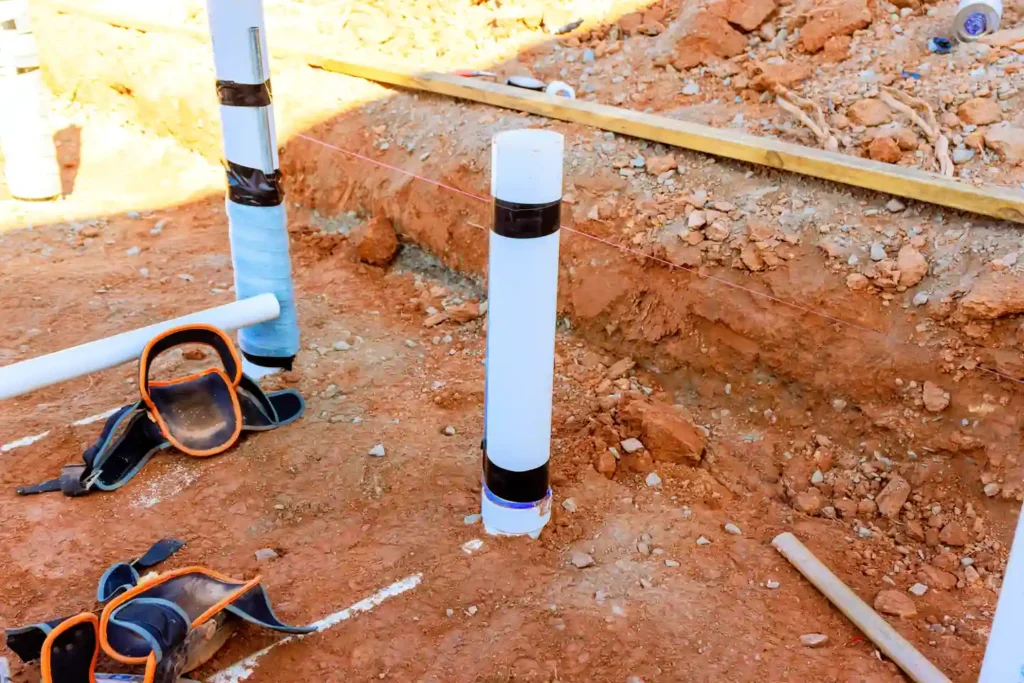
- Collection Piping Network: Strategically placed perforated piping within the aggregate layer collects the soil gas efficiently. Placement and sizing are critical for uniform depressurization.
- Riser Pipes and Exhaust Fan: Vertical riser pipes connect the sub-slab network to an exterior-mounted fan. The fan provides the active suction, maintaining the necessary negative pressure. These fans are built to run, day in and day out.
- Monitoring and Alarms: Pressure gauges (manometers) and alarm systems provide continuous monitoring of system operation, alerting building occupants if the system’s performance drops. This is how you prove it’s working, plain and simple.
Each component needs to be installed with precision, adhering to industry-leading production rates and certified crew standards. There’s no room for error when regulatory compliance is on the line.
Ensuring Quality Installation for Lasting Compliance
The best-engineered system is only as good as its installation. On brownfield sites, where schedules are tight and execution can’t falter, installation quality is paramount for achieving and maintaining compliance. A poorly installed system can lead to short-cycling, inadequate depressurization, or even system failure, jeopardizing the entire project’s compliance status.
Working with installation-first specialists means peace of mind. They understand that time is money, and they’re schedule-obsessed, ensuring that vapor barrier installation, piping networks, and fan systems are put in place efficiently and correctly the first time. This includes rigorous QA/QC protocols, pressure field extension testing, and coordination with building inspectors and environmental consultants. It’s about showing up, getting the job done, and delivering a system that performs exactly as designed—and as regulators demand.
For brownfield redevelopment teams, municipalities, and general contractors, understanding the critical role of sub-slab ventilation in achieving regulatory compliance isn’t just academic—it’s foundational to project success. It’s about leveraging proven methods and expert installation to transform contaminated land into valuable, compliant real estate, on schedule, every time.