When it comes to protecting building envelopes from moisture and harmful soil gasses, the choice between a liquid vs sheet vapor barrier is critical. While sheet membranes have long been a go-to, liquid-applied solutions are increasingly demonstrating superior performance, faster installation, and enhanced durability, making them a top contender for demanding construction schedules and long-term integrity. Time is money on any job site, and a barrier that goes down fast and performs without falter is a serious advantage.
The Foundation: Understanding Vapor Barrier Function
Vapor barriers are non-negotiable for preventing moisture migration and blocking the ingress of soil contaminants like methane and radon into a structure. Their primary job is to create an impermeable layer, safeguarding indoor air quality, structural integrity, and occupant health. This isn’t about boardroom theory; it’s about real-world performance under a concrete slab or against a foundation wall. When these systems fail, the fallout—from mold to structural damage—is costly and time-consuming. Getting it right the first time, with a system built to last, is the only acceptable outcome.
Key Performance Metrics for Vapor Barriers
Evaluating any vapor barrier system boils down to a few core metrics that directly impact a project’s success and longevity:
- Permeance: How resistant is the material to water vapor transmission? Lower is always better.
- Puncture Resistance: Can it withstand the rigors of construction traffic and backfill without compromise?
- Tensile Strength: How well does it resist stretching or tearing under stress?
- Chemical Resistance: Will it hold up against common soil contaminants and building materials?
- Adhesion/Bonding: Does it create a monolithic, gap-free seal with the substrate?
These aren’t just specs on a sheet; they’re direct indicators of how a barrier will perform when the concrete trucks roll in and the building goes up.
Installation Realities: Liquid-Applied vs. Sheet Membranes
This is where the rubber meets the road. A great product on paper is useless if it can’t be installed efficiently and correctly on a tight schedule.
The Sheet Membrane Challenge: Seams and Substrate Prep
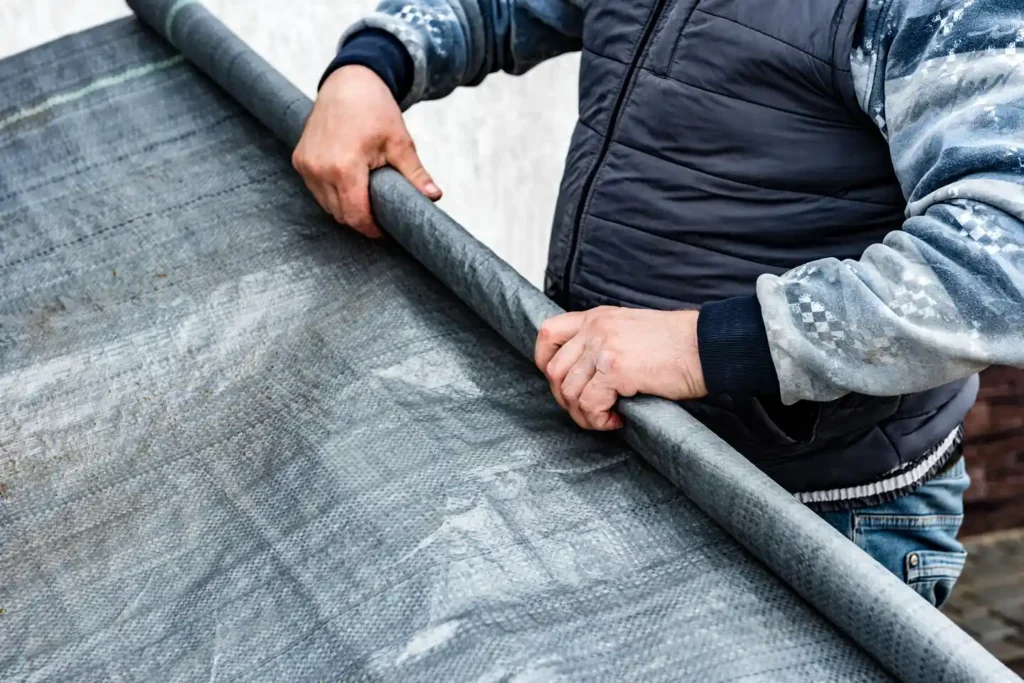
Traditional sheet membranes, typically rolled out and taped at seams, have inherent limitations. Each seam is a potential weak point. Achieving a truly continuous, impermeable layer requires meticulous attention to detail, perfect substrate preparation, and often multiple crew members dedicated solely to cutting, overlapping, and sealing.
- Seam Integrity: Every linear foot of seam is a vulnerability. Tapes can delaminate, or improper surface prep can lead to poor adhesion.
- Irregular Surfaces: Complex geometries, penetrations (pipes, rebar), and uneven substrates are a nightmare for sheet materials, requiring extensive cutting, patching, and sealing that eats up time and increases error potential.
- Weather Dependency: Many tapes and adhesives used with sheet membranes have specific temperature and humidity requirements, leading to delays when conditions aren’t ideal.
- Material Waste: Cutting and fitting around obstructions often results in significant material waste.
When you’re built for speed and focused on hitting deadlines, these challenges can be a major drag on production rates.
The Liquid-Applied Advantage: Monolithic and Fast
Liquid-applied vapor barriers tackle these challenges head-on. Applied as a continuous coating, they form a seamless, monolithic membrane that conforms precisely to the substrate’s contours.
- Seamless Integration: No seams means no seam failures. The barrier is continuous, eliminating the most common point of failure in sheet systems.
- Conforms to Complexities: Penetrations, sumps, and irregular slab edges are easily encapsulated, creating an airtight seal where sheet goods struggle. This means less cutting, less patching, and fewer opportunities for error.
- Rapid Application: With the right equipment and certified crews, liquid barriers can be applied at industry-leading production rates. We’re talking thousands of square feet per day, keeping the project moving forward.
- Strong Adhesion: Liquid systems typically bond directly to the substrate, creating a tenacious seal that resists delamination and ensures long-term performance.
- Reduced Labor, Faster Turnaround: Fewer steps, less specialized cutting, and quicker application translate directly into reduced labor costs and a faster path to the next phase of construction. This agility is what keeps projects on schedule, even when unforeseen delays pop up elsewhere.
Durability and Long-Term Performance
A vapor barrier isn’t a temporary fix; it’s a long-term investment in the building’s health and longevity.
The Wear and Tear of Construction and Beyond
Once installed, a vapor barrier faces immediate threats from construction traffic, rebar placement, and concrete pours. Over its lifespan, it must withstand hydrostatic pressure, chemical exposure, and seismic activity.
- Puncture and Tear Resistance: Liquid-applied systems often boast superior puncture resistance once cured, forming a tough, resilient skin that can better withstand jobsite abuse. Sheet membranes, even robust ones, can be compromised by sharp edges or dropped tools.
- Chemical Stability: Many liquid formulations offer excellent resistance to a broad spectrum of chemicals found in soil, ensuring their integrity over decades.
- Aging Performance: Without seams to degrade or tapes to fail, the monolithic nature of liquid barriers contributes to a more consistent and reliable long-term performance profile.
The Bottom Line: Project Efficiency and Risk Mitigation
For general contractors, developers, and architects, the decision between a liquid vs sheet vapor barrier isn’t just about material cost. It’s about overall project efficiency, risk mitigation, and ensuring a building that performs as designed for its entire lifespan.
Liquid-applied systems, with their seamless application, rapid installation, and inherent durability, offer a compelling advantage. They significantly reduce the potential for installation errors and construction delays, translating into a smoother project timeline and a more reliable barrier against moisture and soil gas intrusion. When schedules are tight and execution can’t falter, choosing a system that’s built for speed and delivers unwavering performance is simply smart construction. It’s about getting the job done right, on time, every time.