Commercial radon mitigation differs significantly from residential approaches due to larger building footprints, complex HVAC systems, higher occupancy, and stringent regulatory oversight. For facility managers, understanding these technical distinctions isn’t just good practice—it’s essential for ensuring occupant safety and maintaining operational continuity. While both aim to reduce radon gas levels, the scale and complexity of commercial projects demand a specialized, robust strategy built for performance and compliance.
Scale and System Design: Bigger Buildings, Bigger Challenges
The most immediate difference in commercial radon mitigation is the sheer scale. Residential systems often deal with a single foundation slab and a relatively simple building envelope. Commercial structures, however, present a labyrinth of interconnected spaces, multiple foundation types, and varied sub-slab conditions.
Sub-Slab Depressurization (SSD) in Commercial Settings
For most commercial buildings, Sub-Slab Depressurization (SSD) remains the go-to method. However, implementing it effectively requires a more sophisticated approach:
- Expanded Suction Fields: A single suction point, typical for a residential home, won’t cut it. Commercial buildings often require multiple suction points strategically placed across vast slab areas to create a uniform pressure field. This demands precise planning, often leveraging existing utility tunnels, elevator pits, or sumps for optimal placement.
- High-Volume, Durable Fans: Residential fans are designed for smaller cubic footage. Commercial applications necessitate industrial-grade fans capable of moving significantly larger volumes of air against potentially higher static pressures. These fans must be robust, often operating continuously, and designed for longevity in diverse environmental conditions.
- Complex Piping Networks: Running extensive piping beneath large commercial slabs requires a detailed understanding of structural integrity, utility interference, and future access. The network must be engineered to maintain consistent airflow and pressure across the entire footprint, often involving larger diameter pipes and more intricate routing.
- Vapor Barrier Integration: In many commercial settings, particularly those with existing vapor intrusion mitigation systems (VIMS), the radon mitigation system must integrate seamlessly. This often means working with engineered vapor barriers that are robust enough to handle the negative pressure without compromising their integrity or the building’s moisture control.
Regulatory Landscape and Compliance: Not Just a Guideline
While residential radon mitigation often follows EPA guidelines, commercial projects are frequently subject to stricter state and local regulations, occupational safety standards, and sometimes even specific federal mandates depending on the building’s use (e.g., schools, healthcare facilities). Compliance isn’t optional; it’s a non-negotiable aspect of the job.
Navigating Commercial-Specific Requirements
- ANSI/AARST Standards: Commercial radon mitigation adheres to the ANSI/AARST (American National Standards Institute / American Association of Radon Scientists and Technologists) standards, such as MAH (Mitigation Standards for Large Buildings and Multi-Family Complexes). These standards dictate everything from testing protocols and system design to installation practices and post-mitigation verification. Ignoring them isn’t just bad practice; it can lead to failed inspections and costly rework.
- Occupancy and Use Considerations: A school, a hospital, or an office building each present unique challenges. Occupancy levels, ventilation requirements, and the presence of vulnerable populations (children, patients) heavily influence acceptable radon levels and mitigation strategies. Systems must be designed to minimize disruption during installation and operation.
- Permitting and Inspections: Commercial projects involve a more rigorous permitting process and require multiple inspections by local authorities. Documentation, including detailed plans, calculations, and post-mitigation test results, must be meticulously maintained for compliance audits. This isn’t just about getting a green light; it’s about proving the system performs as designed, on paper and in practice.
HVAC Integration and Air Quality: Beyond the Simple Vent
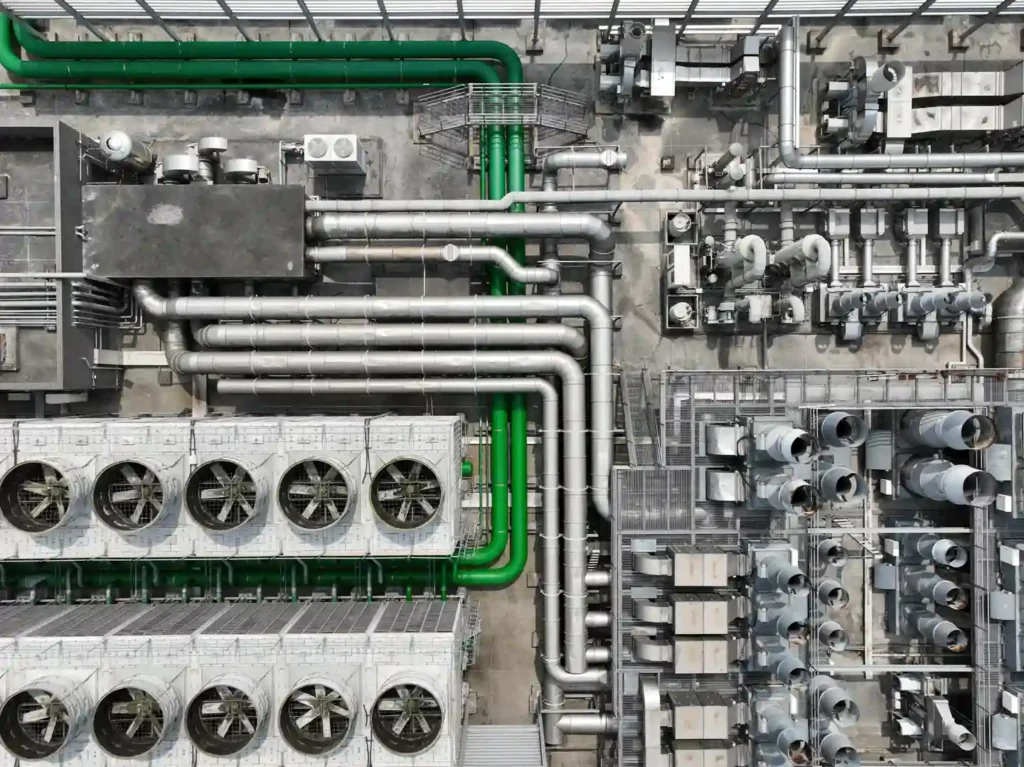
Residential radon systems typically vent directly to the exterior, often with minimal interaction with the home’s HVAC. Commercial buildings, however, have sophisticated and often interconnected HVAC systems that can significantly impact radon dynamics.
Managing Airflow and Pressure Differentials
- Pressure Field Extensions: An improperly designed or installed commercial radon system can inadvertently draw conditioned air from the building, increasing energy costs, or, worse, create unintended pressure differentials that pull more soil gas into other areas. Coordination with HVAC engineers is crucial to ensure the mitigation system complements, rather than compromises, the building’s overall air quality and energy efficiency.
- Exhaust Location and Dispersion: Venting radon-laden air requires careful consideration of prevailing winds, proximity to air intakes, and potential re-entrainment into the building or adjacent structures. Exhaust stacks must be appropriately sized and positioned to ensure rapid dispersion and prevent any localized buildup of radon gas.
- Monitoring and Control Systems: Commercial buildings often benefit from integrated monitoring systems that continuously track radon levels and system performance. These sophisticated controls can tie into building management systems (BMS) for real-time alerts and automated adjustments, offering facility managers greater oversight and peace of mind.
Project Management and Execution: Built for Performance
The operational demands of commercial construction mean that radon mitigation isn’t just about technical expertise; it’s about executing the work efficiently, safely, and on schedule.
Delivering on Large-Scale Projects
- Certified Crews and Specialized Equipment: Commercial projects demand crews certified in large-building mitigation, equipped with specialized tools and experience handling industrial-grade materials. This isn’t a residential job scaled up; it’s a different beast entirely.
- Safety Protocols: Jobsite safety is paramount. Commercial projects often have strict safety regulations that must be adhered to, from confined space entry procedures for sub-slab work to fall protection for roof-mounted fans.
- Schedule-Obsessed Execution: Time is money on a commercial build. Mitigation work needs to be integrated seamlessly into the overall construction schedule, minimizing delays and ensuring other trades can proceed without interruption. This requires an installation partner that is operationally agile and built for speed, capable of deploying certified crews and equipment to meet tight deadlines and deliver industry-leading production rates. We show up, get the job done, and keep the project moving.
For facility managers, choosing an installation partner with a proven track record in commercial radon mitigation isn’t just about getting the job done—it’s about ensuring the solution is robust, compliant, and built to last, without derailing your project schedule.