Effective vapor intrusion mitigation relies on staying current with the latest advancements in materials and technologies. The industry is constantly evolving, driven by the need for more robust, cost-effective, and easier-to-deploy solutions that can stand up to real-world construction demands. Today, vapor intrusion mitigation innovations are centered on high-performance barrier systems, advanced liquid-applied coatings, and integrated monitoring tools that provide real-time data, ensuring projects stay on schedule and compliant from the ground up.
High-Performance Barrier Systems: Engineered for Durability
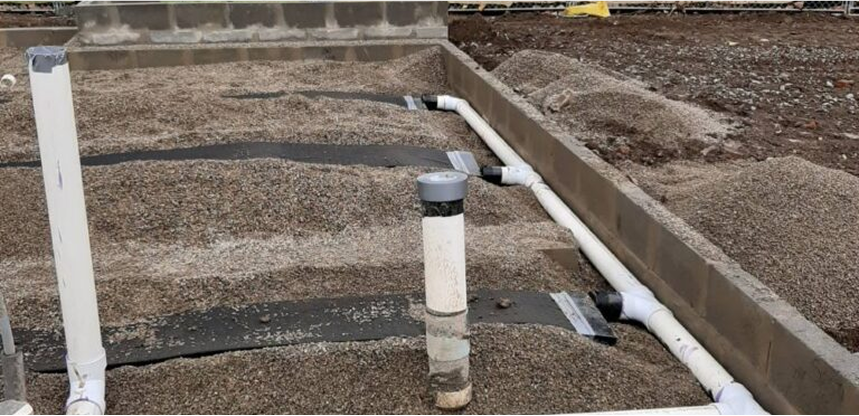
When it comes to keeping hazardous vapors out, the barrier itself is your first line of defense. The days of single-layer, standard polyethylene are largely behind us for complex sites. Modern vapor barrier systems are engineered for superior performance and durability, built to withstand the rigors of construction and long-term environmental challenges.
Multi-Layer Geomembranes: Strength and Resilience
Multi-layer geomembranes represent a significant leap forward. These aren’t just thicker sheets; they’re composite systems designed with specific properties for each layer. You’ll find combinations of high-density polyethylene (HDPE), linear low-density polyethylene (LLDPE), and specialized co-extrusions that offer:
- Enhanced Puncture Resistance: Critical for jobsites where aggregates, rebar, and general construction traffic are a given. A barrier that punctures easily isn’t a barrier; it’s a liability. These materials are built for speed and resilience, reducing the need for costly patch-ups and re-work.
- Superior Chemical Resistance: Sites with a cocktail of contaminants demand a barrier that won’t degrade over time. Advanced geomembranes are formulated to resist a wider range of volatile organic compounds (VOCs), methane, and other hazardous gases, ensuring the system remains intact for the building’s lifespan.
- Low Permeability: The core function – stopping vapors – is boosted. These systems achieve extremely low vapor transmission rates, providing a tighter seal and greater peace of mind.
Installation-first specialists understand that even the best material needs proper handling. These advanced geomembranes require certified crews who can deploy them efficiently, ensuring every seam is welded correctly and every penetration is detailed meticulously. Time is money, and getting it right the first time with robust materials and skilled hands keeps projects on schedule.
Liquid-Applied Vapor Barriers: Seamless Protection
While sheet goods are the backbone, liquid-applied vapor barriers (LAVBs) offer a compelling alternative or complement, especially for complex geometries or retrofit applications. These aren’t just paints; they’re high-performance coatings designed to cure into a seamless, impervious membrane.
Advanced Polymer Formulations: Adaptability and Adhesion
The latest LAVBs leverage cutting-edge polymer science to deliver:
- Seamless Application: Eliminates the need for traditional seams and welds, which are often points of potential failure. This provides a truly monolithic barrier, especially valuable around pilings, sumps, and other intricate details where conventional barriers are challenging to install.
- Exceptional Adhesion: Formulated to bond tenaciously to various substrates, including concrete, masonry, and even existing foundations. This ensures the barrier stays put, even under differential movement or hydrostatic pressure.
- Rapid Cure Times: Built for speed, some modern LAVBs can be walked on or built over within hours, not days. This is a game-changer for tight schedules, allowing follow-on trades to get to work faster without compromising the integrity of the vapor barrier.
- Self-Healing Properties: Certain formulations incorporate self-healing polymers that can seal minor punctures or cracks that might occur post-application, adding an extra layer of operational agility.
Deploying LAVBs effectively requires precision and experience. It’s not just about spraying it on; it’s about proper surface preparation, consistent application thickness, and understanding cure conditions. Schedule-obsessed professionals know that choosing the right LAVB and having certified crews apply it can shave critical days off a project timeline.
Integrated Monitoring and QA/QC Technologies: Verifiable Performance
A vapor barrier is only as good as its installation and its ongoing performance. Vapor intrusion mitigation innovations now include robust monitoring and Quality Assurance/Quality Control (QA/QC) technologies that provide verifiable data, moving beyond simple visual inspections.
Real-Time Sensor Networks: Proactive Management
The future of vapor intrusion mitigation involves intelligent, integrated systems:
- Sub-Slab Pressure Monitoring: Sensors embedded beneath the slab continuously monitor pressure differentials. This allows for immediate detection of potential issues, such as a breach in the barrier or a change in soil gas dynamics, enabling proactive adjustments to venting systems.
- VOC Sensors: Miniaturized sensors can be strategically placed to detect specific VOCs, providing early warning if contaminants are migrating into the building envelope. This continuous feedback loop is crucial for high-stakes projects where even minor vapor intrusion is unacceptable.
- Wireless Data Transmission: Data from these sensors is often transmitted wirelessly to a central hub or cloud-based platform, allowing project managers and building owners to monitor conditions remotely and in real-time. This cuts down on site visits and ensures operational agility.
These monitoring tools aren’t just about identifying problems; they’re about proving that the system is working as intended. For general contractors and developers, having verifiable data is a powerful tool for demonstrating compliance and mitigating long-term risk. It’s straight talk backed by hard numbers.
The Bottom Line: Execution and Expertise
These vapor intrusion mitigation innovations—from multi-layer geomembranes to advanced LAVBs and smart monitoring systems—are changing the game. They offer superior protection, greater durability, and enhanced verifiability. But the best materials and technologies are only as good as the team putting them in place.
Getting these advanced systems installed correctly, on schedule, and to specification requires an installation-first mindset. It demands certified crews who understand the nuances of each material, who can adapt on the fly to jobsite conditions, and who are obsessed with meeting deadlines. When schedules are tight and execution can’t falter, partnering with professionals who specialize in high-performance installation at industry-leading production rates is non-negotiable.