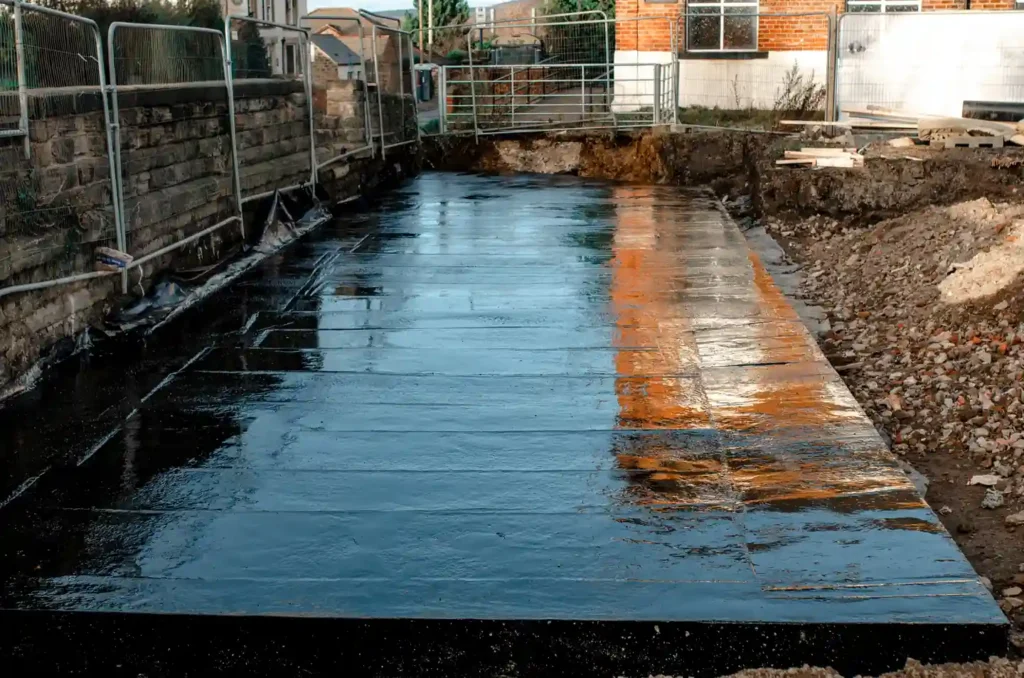
A liquid-applied vapor barrier is a specialized coating designed to prevent the migration of moisture vapor through building components, primarily concrete slabs. Unlike traditional sheet membranes, these systems are sprayed or troweled onto surfaces, forming a seamless, monolithic film that effectively blocks moisture from reaching sensitive finishes like flooring. For contractors, understanding these systems isn’t just about product specs; it’s about protecting your project’s integrity and staying on schedule.
The Unseen Threat: Why Vapor Barriers Matter
Moisture is a relentless force in construction. Even seemingly dry concrete slabs can emit significant amounts of moisture vapor, leading to costly failures if not properly managed. This isn’t theoretical; it’s a job site reality that can derail schedules and destroy reputations.
The Problem with Concrete and Moisture
Concrete, by its nature, is porous. As it cures, water is released, but ambient moisture from the ground or atmosphere can also migrate through the slab. If this moisture reaches adhesive-backed flooring, it can cause:
- Adhesive failure: Softening, delamination, or complete breakdown.
- Floor bubbling/blistering: Unsightly and structurally compromising.
- Mold and mildew growth: A health hazard and a remediation nightmare.
- Odor issues: Persistent musty smells that are hard to eliminate.
These aren’t minor inconveniences; they’re project-stopping problems that lead to expensive tear-outs, re-dos, and significant delays. When you’re managing a tight construction timeline, these are the last things you need.
Liquid-Applied vs. Sheet Membranes: A Straight Comparison
While both types of barriers aim to stop moisture, their application and performance characteristics differ, impacting project timelines and outcomes.
Sheet Membranes: The Traditional Approach
Traditional sheet membranes are rolled out and adhered to the slab. They’ve been a staple for good reason, offering robust protection when installed perfectly. However, their Achilles’ heel is their reliance on meticulous seaming and detailing. Every seam, every penetration, every corner is a potential weak point if not sealed flawlessly. This can be time-consuming and requires an exacting hand to prevent future issues.
Liquid-Applied Barriers: Built for Speed and Seamlessness
Liquid-applied systems offer a distinct advantage in their application. Sprayed or troweled on, they create a continuous, monolithic layer. This means:
- No seams: Eliminating the primary failure point of sheet membranes.
- Conforms to irregular surfaces: Easily coats around pipes, columns, and other penetrations without complex cutting and sealing.
- Faster application: Often applied at industry-leading production rates, significantly cutting down on installation time and keeping your project moving.
- Reduced material waste: Less cutting and fitting often means less waste on the job site.
When schedules are tight and execution can’t falter, the speed and seamless nature of liquid-applied systems are a major win.
Common Misconceptions About Liquid-Applied Vapor Barriers
There are a few myths circulating that need debunking. Getting the facts straight ensures you make the right call for your project.
Misconception 1: “They’re just paint, not a real barrier.”
The Reality: Liquid-applied vapor barriers are engineered, multi-component systems, not just a coat of paint. They are formulated with epoxies, urethanes, or other polymers designed to achieve extremely low moisture vapor transmission rates (MVTR), often exceeding the performance of many sheet goods. They cure to form a tough, impermeable layer specifically designed for sub-slab moisture mitigation.
Misconception 2: “Installation is complicated and messy.”
The Reality: While precision is always key in construction, certified crews with the right equipment can apply these systems with remarkable efficiency and cleanliness. The “messy” perception often comes from inexperienced applicators. When you’ve got professionals on site, it’s a controlled process, built for speed and minimal disruption.
Misconception 3: “They don’t hold up to job site abuse.”
The Reality: Once cured, many liquid-applied systems are incredibly durable and resistant to typical job site traffic and minor impacts. They are designed to withstand the realities of construction until flooring is installed. Of course, proper protection protocols should always be in place for any finished surface.
Ensuring Performance: Beyond the Product
A superior product is only as good as its installation. This is where the rubber meets the road. Even the best liquid-applied vapor barrier will fail if not applied correctly.
The Critical Role of Surface Preparation
Before any liquid-applied system goes down, the concrete slab must be properly prepared. This means:
- Cleanliness: Free of dust, debris, oils, and other contaminants.
- Dryness: Within manufacturer specifications for moisture content.
- Profile: Often requiring mechanical profiling (e.g., shot blasting) to create a surface suitable for adhesion.
Cutting corners here guarantees failure. There’s no room for “good enough” when it comes to moisture mitigation.
Certified Crews and Quality Control
The application itself demands expertise. Certified crews understand:
- Mixing ratios: Crucial for proper curing and performance.
- Application rates: Ensuring correct mil thickness for the specified MVTR.
- Environmental conditions: Temperature and humidity can impact curing and adhesion.
- Detailing: Proper treatment of cracks, expansion joints, and penetrations.
A schedule-obsessed approach means getting it right the first time. Professionals verify every step, conduct regular checks, and ensure adherence to manufacturer specifications and industry standards like ASTM F3010. This isn’t boardroom polish; it’s job site professionalism that ensures the barrier performs as promised.
The Bottom Line for Contractors
For construction professionals, a liquid-applied vapor barrier is a powerful tool in your arsenal to protect projects from moisture-related failures, keep schedules on track, and deliver quality. When you need a reliable installation partner that’s operationally agile and built for real-world construction challenges, you need a team that focuses exclusively on high-performance installation at industry-leading rates. Time is money, and meeting deadlines, even working through delays, is paramount. Choosing the right system and, more importantly, the right installer means you show up with a solution that works, every time.